Transportation - Public Transit

RAIL vs AUTO TRANSPORT

Lela Gary, Alex Payne, Allan Brand
March 2005

Transportation is a vital component of Canada's economic prosperity and Canadians' quality of life, but to ensure success in both, we must strive for sustainability and proportionate balance among all modes of transportation.

We define sustainability as the measures and controls taken to manage a system that will prevent damage and degradation of the environment,ecological integrity and land area on a long-term basis.

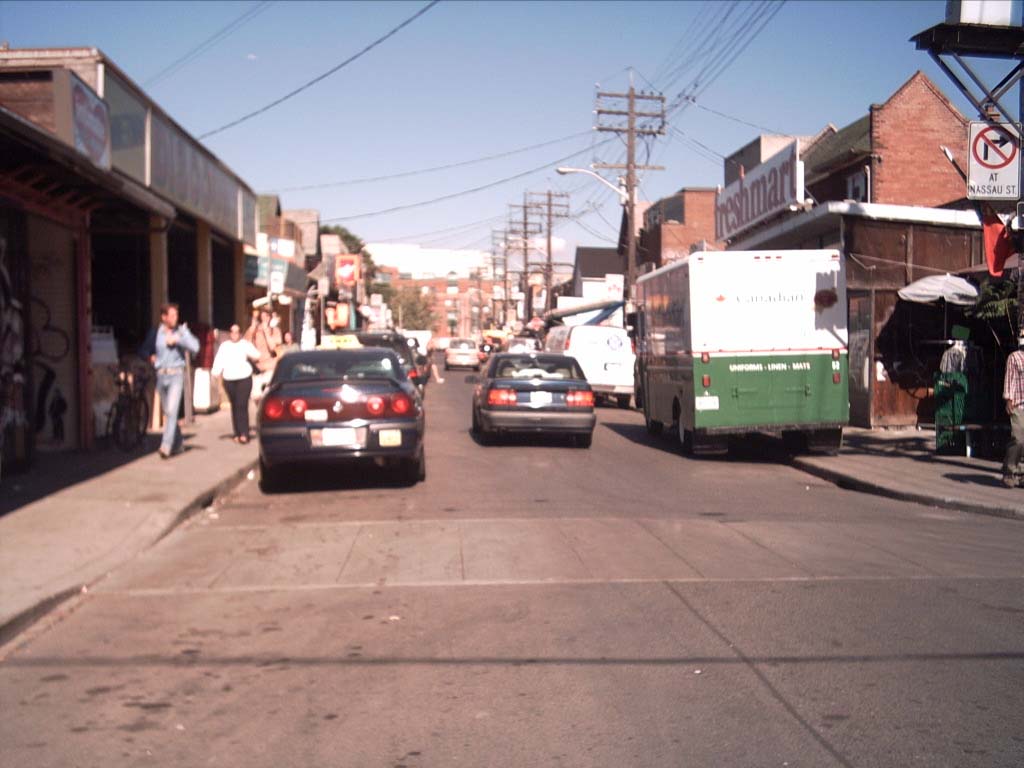
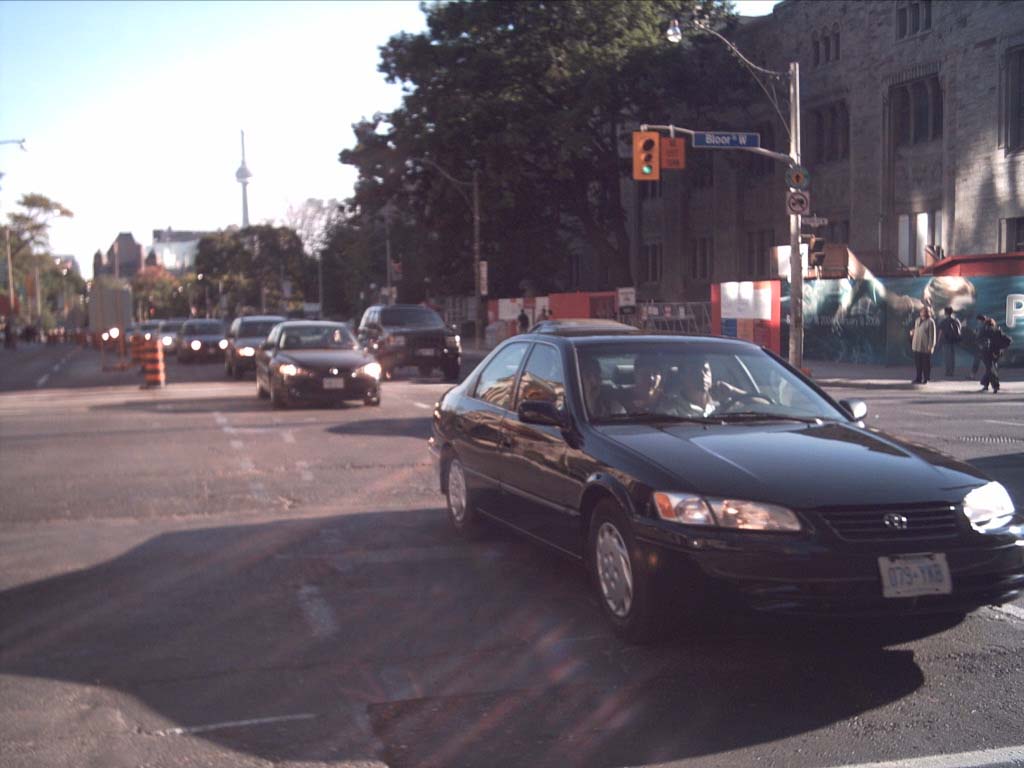
Canada has not been successful facing these challenges. There is unequal distribution in transportation in favour of auto/truck transport at the expense of rail transport within Ontario. This is evident in the continuous road congestion, paralyzing traffic in cities while alternative modes of transportation such as public transit, cycling and walking, have been ascribed inconsequential role.

The automobile has been considered to be the most unsustainable mode of urban transportation. The economic and social cost of congestion is a problem not solved with expansion and widening of roads. It has created air, noise and visual pollution that have drastically compromised our health.

Even though the emissions have decreased over the past few years due to regulations to reduce the health effects of air pollution, the greenhouse gas emissions from transportation is 34% which is equal to the industrial percentage; 77% is from road transportation, 9% from aviation, 6% from marine and only 4% from rail. Our cities are increasingly being alienated from a human scale environment. Agricultural and forested areas appropriated for highway infrastructure have intensified urban sprawl. Even hybrid cars are unsustainable, considering that they will offset the improved amount of emissions by their sheer number, in addition to the continuation of land waste and urban sprawl.

Yet, both the Federal and Provincial governments continue to invest in and subsidize the automobile industry, totally disregarding the long-term advantages to rail transportation. The Ontario government committed $435M to General Motors alone in March 2005, with an additional $500M auto sector investment fund to attract other automakers. The Federal government is planning to invest $66 billion to road infrastructure in the next 10 years. Knowing that there is a depletion of natural resources, should this not be regarded a short-sighted, micro-management by our governing officials? According to scientists and economists, "peak oil" is expected to happen in the next two decades; why then, are forewarned politicians not forearmed? Do they have a myopic vision or blinding self-interests that disables them to see that in order for our economy to survive and flourish, needs to invest in sustainable and economically viable modes of transport. If present infrastructure is becoming increasingly unsustainable, as most advanced countries have come to realize and invest in rail infrastructure, then Ontario should follow the lead and initiate plans to make a transition toward rail industry to take over the impending outdated automobile industry. The emphasis should be on government funding in collaboration with private investment. Jos Dings,Director of the European Federation for Transport and Environment said, "the benefit of attracting private money is that private money tends to sniff out viable investments. Reducing the risks to private capital is a way of fast-tracking unviable projects".

In Canada in 2004: Rail Transport contributed to the economy $5,592,000, (GDP) at basic prices.
Transit (Ground and Passenger transport) contributed $5,297,000
Trucking transport contributed $14,656,000.
Based on the notable contribution of the truck industry to the economy, provincial, territorial and local governments spent $17 billion on transportation in 2003 with 79% going to roads and highways. $14 billion was spent on roads while public spending on public transit services was $2.6 bil.

Does the GDP that records sales, have a ledger for losses of natural assets? No.

Investment in Rail transportation by both the Federal and Ontario governments, pales compared to countries with an extensive rail infrastructure.

FRANCE:

Has led the charge with regards to rail transportation, particularly in the development of a high-speed rail network, Train`a Grande Vitesse(TGV). It has been estimated that since its inauguration over 25 years ago, the government has allotted over $12 billion dollars (US). Most of this investment is funneled through the government owned railway company Societe National des Chemins de fer Francais or SNCF, and in 1998 the government provided Euro $362 million. Although the SNCF has experienced financial difficulties in recent years, the TGV NG (Nouvelle Generation)remains a profitable venture for both France and the European Investment Bank which granted over $500 million Euro. Current estimates of funding for the French rail system rest on around $9.5 billion (Euro) or 0.7% of the GDP of France,US $1,714.86 The SNCF has currently undertaken a refinancing initiative worth $7 billion (Euro) invested directly into the private sector,giving a total of 42% of funding being pushed into private funds.

GERMANY:

A highly sophisticated railway network dominated by the Deutsche Bahn AG(DB AG) owned by the Federal government. The company has a purchasing volume of$13 billion per year of which 50% is for new infrastructure. It has an investment volume of $45 billion (Eu) for the years 2002 to 2006. Germany's GDP in 2003 was US $2,178.18 $28 billion (Euro) are planned for new or upgraded track,$10 billion for rolling stock and $3 billion for stations. High speed trains known as ICE T(Inter-City Express) are tilting trains, whose speed averages 230km/h.
Tilting trains(able to run on conventional lines) offer time-savings of between 10%-20% on inter-regional and inter-city networks at one fifth of the cost of building the new infrastructure necessary for high speed trains. However, Germany has developed the highly priced Magnetic-Levitation (Maglev)technology to apply to the 5th generation ICE trains, Diesel-electric, which can clock in at over 500km/hr. A number of rail inter and intra city networks are served by regional and commuter lines,(S-Bahn, RB,IR,EC,IC) run from a city's centre to the suburbs and integrated with the local subway or streetcar system.

FINLAND:

Finland's high speed train, a version of the tilted Pendolini, runs on an integrated rail network aim to increase market share from an impressive 60% of internal long-distance travel and 39% of all public transport.
The 8 newly acquired high speed tilting trains, at a cost of EU $13.5 million each, are able to operate in a wide range of weather between -40C/+35C making them very suitable for Canadian climate. Current Finnish rail is set up with a fleet of 119 electric trains running in high density corridors, and an additional 429 diesel extending to less populated areas. Finland having low population density (15 individuals/km2) and low GDP (US)$141.8 billion,2003, has been quite successful with an advanced and well integrated rail network.

CANADA:

A high speed dedicated rail infrastructure to accommodate the TGV type trains of France's or the MagLev trains of Germany, is not available in Canada, as it could ill afford the expenditure. The total Capital and Repair Expenditures for Transportation and Warehousing, which includes Private and Public Investment in 2003 was: Rail Transportation = CAD $3,028.0 billion
Truck Transportation= CAD $2,626.5 billion
Transit & Ground Passenger Transport= CAD $2,549.7 billion

Canada's contribution to high speed rail is the tilting trains that first appeared in 1969 on CNR. Marred by lengthy interruptions and other tribulations, it was retired in 1984. A replacement train built by Bombardier,the LRC(Light,Rapid,Comfortable) entered service in 1981 for VIA Rail linking cities in the Windsor-Quebec corridor. It was a very conventional train of separated cars instead of being articulated, at speeds never exceeding 170km/hr. Retired in 2000 and replaced by a more conventional diesel-electric locomotive manufactured by General Motors and General Electric at the average running speed of 140km/hr. The LRC became the hallmark of VIA Rail and it is still considered state-of-the-art tilting train technology.

What ONTARIO needs: Connectivity and Accessibility

Finland is a good model for comparison to Canada with its low population density (15individuals/km2) and a low GDP US $132billion as it has been quite successful with an advanced and well integrated rail network.

Considering that Canada's GDP US $994 billion(2003) and 12,7individuals/km2 in all of Ontario, much higher in the Windsor-Quebec City corridor, it would be prudent to follow Finland's system. In Canada, 80.4% of population is urbanized. The higher the figure for GDP and the higher the population density, the easier it is to support high speed rail.

* Upgrade and improve infrastructure and service for the tilting Pendolino train in combination with the Light Rail system in and around the Greater Toronto Area.

Tilting Trains

Tilting trains cost about 20 times less per unit distance to upgrade existing lines than it does to build a dedicated high speed line, because minimal modification of existing tracks is required. The initial investment for both systems is small, as there is no need to replace existing infrastructure. Less congestion, quicker travel time, less maintenance expenditures on roads and less dependence on fossil fuels, translate to sustainability and economic viability.

Electric Light Rail: S70 Avanto

* The Light Rail system in connection with the regional/inter city rail system, will accommodate the majority of 1.6 million people driving into the city core daily, endlessly congesting GTA. The population of GTA is expected to increase by over 2 million by 2020. Currently 90% of the population lives within 2km of a railway right of way. The TTC is in the midst of replacing its current streetcar set with light rail vehicles ALRVs and CLRVs. This development would represent a major improvement in the continuing expansion of the infrastructure of the city.

Both the Provincial and the Federal governments have failed to implement a human scale environment and sustainable transportation; the end result is a horrendous congestion in our cities that has compromised our health and our economy. Altering our priorities and redirecting investment and subsidy from auto/truck industry to rail industry, will be the best viable alternative environmentally and economically.

WEB-REFERENCES:
http://www.t-e.nu/docs/Press/2005/2005-03-09_eu_loan_guarantee_tens.pdf
http://europa.eu.int/comm/research/news-centre/en/tra/02-07-tra01a.html
http://www.transports.equipment.gouv.fr/frontoffice/index.html
http://lesfinances.sncf.com/anglais/funding.htm
http://www.ter-sncf.com/uk/regionalization_frameset.htm
http://www.indexmundi.com/france/gdp.htm
http://www.trainweb.org/tgvpages/research.html
http://commdocs.house.gov/commitees/Trans/hpw107-38.000hpw107-38_O.HTM#1
http://static.highbeam.com/e/europeanreport/october262002/eibfrancenewloanfortgves europehighspeedraillinkeu/
http://www.railway-technology.com/projects/germany/
http://www.trade.uktradeinvest.gov.uk/railways/germany/profile/overview.shtml
http://www.dw-world.de/dw/article/0,,594934,00.html
http://www.letsgo.com/GER/03-Essentials-268?PHPSESSID=fl783a04a7628c9a53860fc34491af80
http://www.railway-technologycom/projects/finland
http://www.o-keating.com/hsr/besthst.htm#switzerland
http://www.sci.fi/~rautatie/rstock/sm3.shtml
http://www.canadainfolink.ca/chartten.htm
http://www.tc.gc.ca/pol/en/anre/transportation_annual_report.htm
http://www.statcan.ca/start.html
http://www.oecd.org
http://transit.toronto.on.ca/spare/0213/shtml
http://www.lightrail.com/carspecpages/toronto/alrv.htm
http://www.nowtoronto.com/issues/2005-01-27/news_story3.php
http://www.thestar.com (Mar.2,2005)